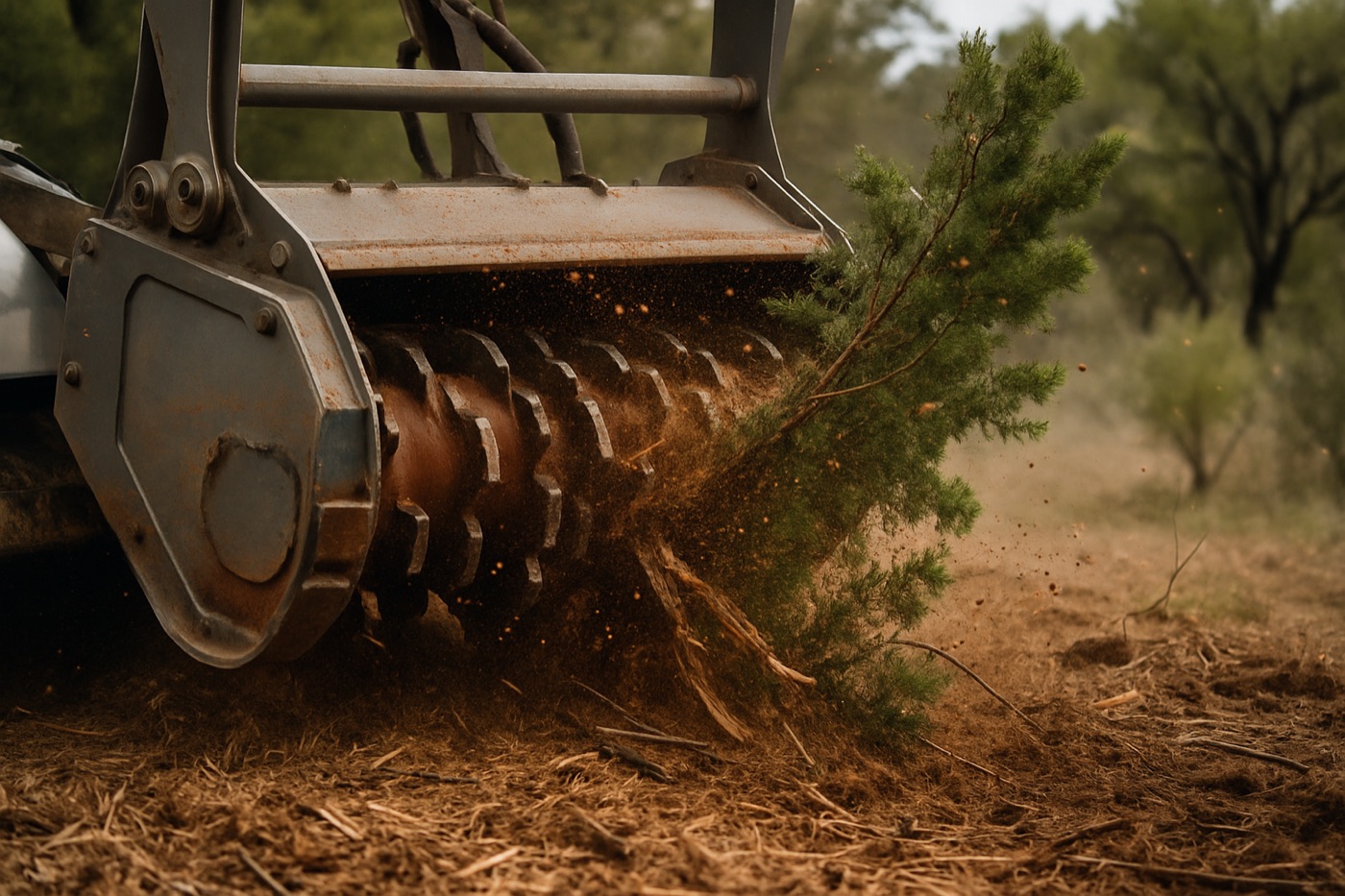
What the machine actually does
A forestry mulcher is a tracked machine with a drum of carbide teeth that grinds standing trees and brush — typically everything up to 6–8 inches in diameter, bigger with the right head — into mulch, in place, in one pass. The three things that makes obsolete: the burn pile (a genuine liability in a county with Bastrop’s fire history and recurring burn bans), the haul-off truck (a real budget line), and the scraped-earth look of dozer clearing. What’s left is a walkable surface of mulch that suppresses regrowth, holds moisture, and composts into the sandy soil that badly needs the organic matter.
What it costs, honestly
Density is the price. Scattered mesquite and light brush mulches at $1,500–$3,000/acre. The classic Bastrop wall of cedar and yaupon — the stuff you can’t see ten feet into — runs $3,000–$5,000/acre because the machine spends triple the time per acre in it. Day-rate work ($1,800–$2,500/day with operator) sometimes makes more sense for mixed or open land where an experienced operator can cover ground fast. And mobilization is fixed: clearing ten acres costs meaningfully less per acre than clearing two, so if you’re phasing work, price both versions before committing to the small bite.
Where mulching is the wrong tool
Honesty clause: mulching grinds what’s above ground. Roots and stumps stay (ground low, but there). That’s fine — often ideal — for land management, trails, views, hunting lanes and fire fuel reduction. It’s wrong for building pads, driveways, and anywhere you’ll be discing or deep-working the soil, where roots must be grubbed out — that’s site-prep work, priced differently because it is different work. Plenty of Bastrop jobs sensibly combine both: grub the pad, mulch the rest.
Selective work is the skill
The good operators don’t clear-cut — they sculpt. Keep the oaks and the healthy pines, erase the cedar drinking your groundwater, open sight lines without leaving the land bald. Around the Lost Pines especially, the difference between a mulching job and a good mulching job is what’s still standing when the machine loads out. Walk the land with the operator first and flag what stays; five minutes of ribbon saves a decade of regret.
Common questions
What size trees can be mulched?
Routinely up to 6–8" diameter; larger with heavier machines, though big trees are often better dropped and processed separately. Cedar and yaupon — Bastrop’s main offenders — are squarely in the sweet spot.
How many acres per day?
Light brush: 2–4 acres/day. Dense cedar/yaupon: sometimes less than one. This is exactly why estimates happen after a walk-through, not over the phone — density is everything.
Will the brush grow back?
Cut cedar (ashe juniper) doesn’t resprout from the stump — mulch it and it’s gone. Yaupon and mesquite do resprout and want a follow-up pass or spot treatment in a year or two. The mulch layer itself suppresses a lot of the comeback.
Is mulching okay during a burn ban?
Yes — that’s much of the point. No burning happens at all. Operators do carry water and watch conditions on red-flag days since machinery in dry brush demands respect, but there’s no pile and no permit needed to not light one.
Get a mulching estimate
Tell us where the land is, the acreage, and what’s growing. A local operator will call back — usually same day — and walk it with you.
Got it — expect a call back shortly to set up a walk-through.