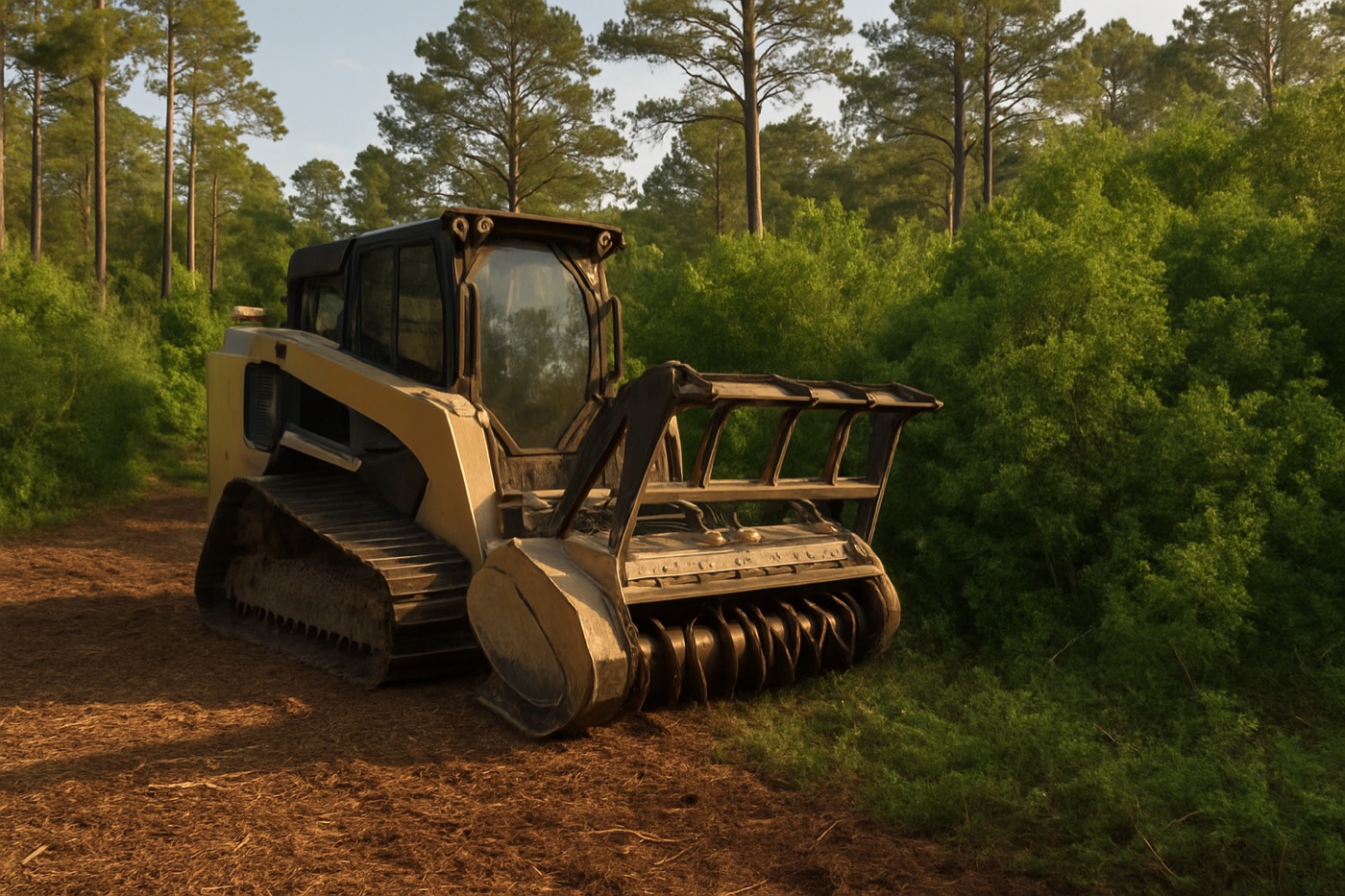
Clearing services in Bastrop County
Between the growth pouring down 71 and 290 and land that grows cedar like it’s paid to, Bastrop County keeps clearing crews busy year-round. These are the four jobs they run every week.
Forestry mulching
The machine that turns standing brush into ground cover in one pass — no burn piles, no haul-off, no scraped topsoil.
Forestry mulching →Lot & homesite clearing
From raw trees to build-ready pad site — clearing, grubbing, and grading that your builder can start on.
Lot clearing →Underbrush & cedar control
Selective clearing that keeps your oaks and pines, kills the cedar and yaupon, and turns thicket back into land.
Underbrush →Firebreaks & defensible space
This county has burned before. Fuel reduction around homes and property lines, done the way the foresters recommend.
Defensible space →
Which method does your land need?
Clearing is priced by method and density, not by wishful thinking. The honest matchup:
What clearing actually costs in Bastrop County
Honest 2026 ranges. Every tract is different — density, terrain, access, and what happens to the debris move the number — but these are the real brackets bids land in.
| Work | Typical range |
|---|---|
| Forestry mulching, light-to-medium brush | $1,500 – $3,000 / acre |
| Forestry mulching, dense cedar / yaupon | $3,000 – $5,000 / acre |
| Heavy clearing with grubbing & haul-off | $5,000 – $8,000 / acre |
| Homesite / lot clearing package (1–2 acres) | $2,500 – $8,000 |
| Fence line & right-of-way clearing | $1 – $3 / linear ft |
| Defensible-space package around a home | $2,000 – $6,000 |
| Stump grinding | $100 – $400 / stump |
| Final grading after clearing | $1,000 – $3,500 |
| Mulcher with operator, day rate | $1,800 – $2,500 / day |
Per-acre prices drop meaningfully on bigger tracts — mobilization is a fixed cost, so 10 acres prices better per acre than 2. If you’re thinking about doing half now and half later, ask for both numbers before deciding.
Bastrop land has its own rules
This is two counties wearing one name. West of the river it’s post oak savannah and mesquite-cedar ground like the rest of Central Texas. East and south, the Lost Pines — the westernmost loblolly pine forest in America — change everything: sandier soils, taller fuels, and a fire history nobody here has forgotten. The 2011 Bastrop County Complex Fire took over 1,600 homes; Hidden Pines burned again in 2015. That’s why defensible space isn’t a sales pitch in this county — it’s maintenance, like gutters.
Mulching beats dozing on most land, most of the time. A dozer pushes everything — brush, roots, and your topsoil — into piles that then have to burn or haul. A forestry mulcher grinds standing brush where it stands and leaves the soil structure alone, which matters double on the sandy Lost Pines ground that erodes when scraped. Dozers and grubbing still win where roots truly must go: pads, driveways, pasture conversion. A good operator tells you which is which, tract by tract.
The boom is real and it clears land. Between the Boring/SpaceX/X campuses on 71, Tesla up the road, and every third pasture splitting into ranchettes, Bastrop County machine time books out. Whether you’re opening up ten acres near Rosanky, prepping a build in Cedar Creek, or finally winning the yaupon war in Tahitian Village — Bastrop Land Clearing connects you with experienced, insured local operators who’ll walk the land and price it straight.
Questions Bastrop landowners actually ask
How much does it cost to clear an acre in Bastrop County?
Mulching runs $1,500–$3,000/acre for typical brush, $3,000–$5,000 for dense cedar and yaupon. Full grubbing with haul-off runs $5,000–$8,000/acre. Density and access drive everything — which is why real bids happen on-site, free.
Mulching or bulldozing — which do I want?
Mulching for land management, underbrush, and anywhere you’re keeping the land natural: faster, cheaper, no burn piles, topsoil intact. Grubbing/dozer work where roots must go: building pads, driveways, pasture reclamation. Most properties end up with some of each.
Do I need a permit to clear my land?
On private rural land in unincorporated Bastrop County, generally no for ordinary clearing. Exceptions worth checking: platted subdivisions with tree covenants (several in the Lost Pines have them), floodplain areas, and anything near the Houston toad habitat zones — five minutes of checking beats undoing work.
What happens to all the debris?
Mulching leaves it as ground cover that composts in place — most clients love losing the burn pile. Grubbing produces piles that either burn (when the county isn’t under a burn ban — check the current status) or haul, which is a real cost line. Every bid should say which.
Can clearing help my wildlife or ag exemption?
Often, yes — selective cedar removal is a recognized wildlife-management practice, and opening grazable land supports ag use. Keep invoices and photos; your appraisal-district paperwork will thank you.
Get a free clearing estimate
Tell us where the land is, roughly how many acres, and what you want it to look like when we’re done. A local operator will call you back — usually the same day — to set up a walk-through.
Got it — expect a call back shortly to set up a look at the land.