The two invaders, and why they win unmanaged
Yaupon holly is the shade-tolerant one: it fills the understory beneath your oaks and pines into a wall you can’t see through, and it resprouts when cut, which is why one-time brute force disappoints. Ashe juniper ("cedar") is the sun-loving one: it colonizes open ground, drinks prodigiously, drops allergy season on the whole county every winter — and mercifully does not resprout, so what you cut stays cut. A managed property deals with both differently: mulch the cedar and it’s done; mulch the yaupon and plan a cheap follow-up pass or spot treatment a year later to catch the resprout. That two-step is the honest version — anyone selling permanent yaupon eradication in one visit is selling weather.
What "selective" buys you
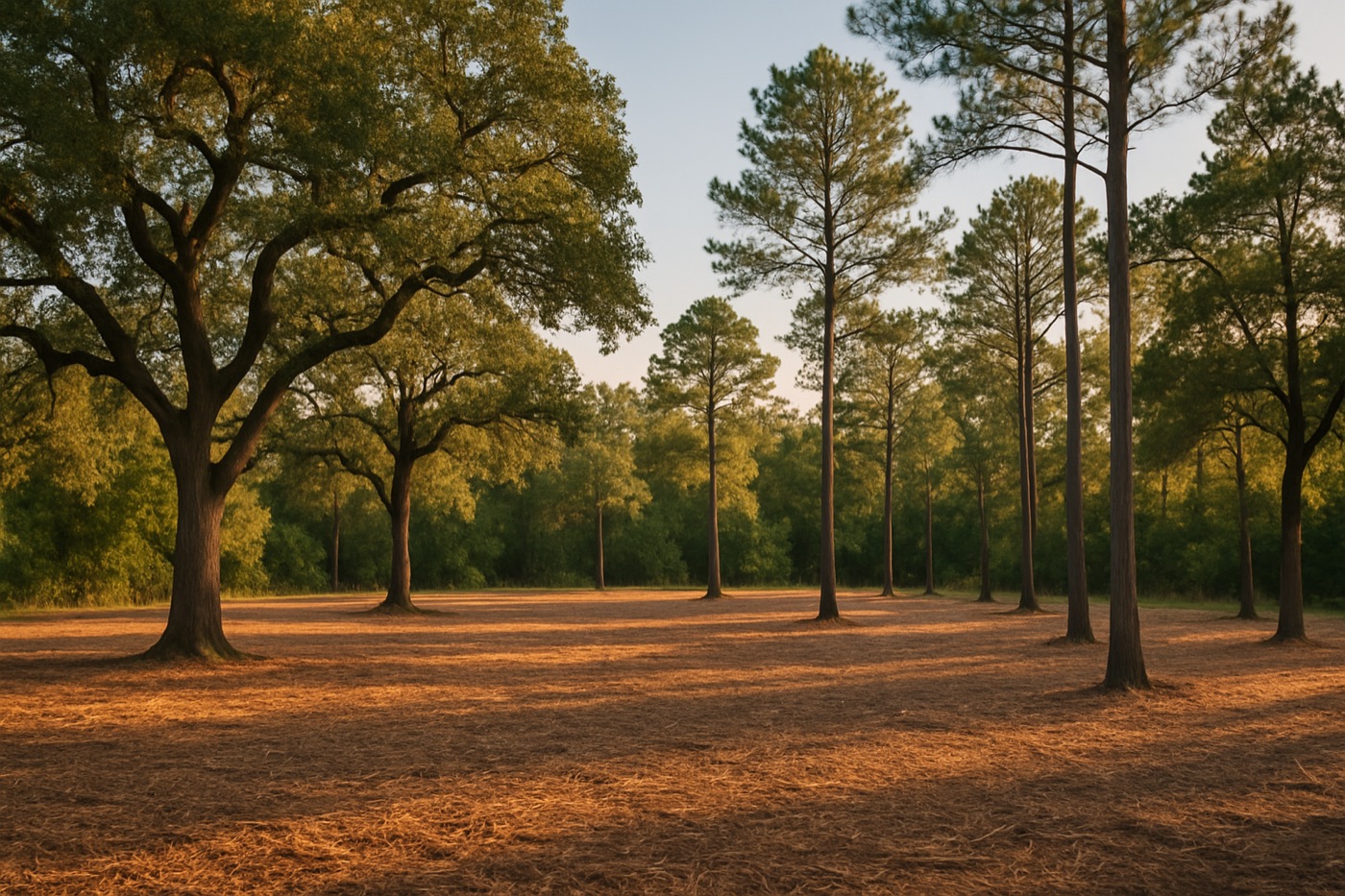
Underbrush work is sculpting, not scraping: machines sized to move between keeper trees, grinding the understory to mulch while the canopy stands. What comes back is the land people think they bought — park-like ground under big trees, sight lines across your own property, grass where sunlight finally lands, huntable lanes, walkable fence lines, and a place kids can actually roam. On grazing land it’s recovered forage; on Lost Pines lots it’s most of a defensible-space plan already done.
The exemption angle, done right
Selective brush management earns its keep at the appraisal district too. Cedar removal and understory control are recognized practices under wildlife management plans (habitat improvement) and support ag use where cleared ground returns to grazing. The paperwork discipline is simple: keep the invoice, take before-and-after photos, and note the acreage treated — your future self at exemption-renewal time will be grateful. If the exemption is the goal, say so up front; it can shape which areas get treated first.
Pricing that follows density
Underbrush work prices like all mulching: by what’s standing. Typical understory clearing beneath a healthy canopy runs at the lighter end of mulching rates — $1,500–$3,000/acre — climbing toward $3,000–$5,000 where the yaupon has had decades to dig in. Multi-acre jobs mobilize once and price better per acre. The walk-through is free and the number you get after it is real.
Common questions
Will clearing cedar help my allergies?
Clearing your own cedar removes your nearest pollen sources and genuinely helps close to the house — but December cedar pollen travels miles, so the county-wide season still finds you. Think local relief, not immunity.
Does clearing cedar really save water?
Mature ashe juniper intercepts and transpires substantial water. Clearing dense cedar measurably improves soil moisture and spring flow on many Central Texas properties — one reason it anchors so many land-management plans.
How do I keep the yaupon from coming back?
Plan on a light follow-up: a quick second mulching pass or targeted herbicide on resprouts 12–24 months later, at a fraction of the original cost. After that, occasional maintenance holds the line indefinitely.
Is this good or bad for wildlife?
Done selectively, good — edge habitat, browse regrowth and open understory suit deer and turkey far better than impenetrable monoculture thicket. Leaving some brush mottes for cover is standard practice, and it’s exactly the kind of work wildlife-exemption plans reward.
Get an underbrush estimate
Tell us where the land is, the acreage, and what you’re fighting — cedar, yaupon or both. A local operator will call back, usually the same day.
Got it — expect a call back shortly to set up a walk-through.